Choosing flowers is often the easy part. Finding a vase that makes them look their best can take a little more thought. A vase that is too tall may hide too much of the stems, while one that is too short or wide can leave an arrangement looking unsupported.
So, what size vase do you need for flowers? Start with three things:the length of the stems, the number of flowers, and the width of the vase opening. Where you plan to display the arrangement matters, too.
This simple vase size guide will help you find the right proportions for everyday bouquets, single stems, wedding flowers, and table centerpieces.
What Size Vase Should You Use for Flowers?
A useful starting point is to choose a vase that supports the lower portion of the stems while leaving enough of the flowers visible above the rim. There is no single vase-to-flower ratio that works for every arrangement, since flowers vary considerably in stem length, bloom size, and weight.
Instead, look at the arrangement as a whole. Longer stems generally pair well with taller vases, while shorter stems and compact bouquets are easier to arrange in shorter vessels.

Opening size is just as important as vase height. A narrow neck gathers the stems together, while a wider opening gives them more room to spread.
For example, the Richland Opal Vase is 7.5 inches tall but has a narrow 1-inch opening. That combination helps gather stems while still giving them height, making it useful when you want a more upright arrangement.
Vase Size Guide by Flower Arrangement
Rather than choosing a vase based on height alone, think about the type of arrangement you want to create.
|
Flower Arrangement |
Vase Style to Consider |
Works Well For |
|
Single stem or a few stems |
Bud vase |
Roses, tulips and individual blooms |
|
Small arrangement |
3–6" vase |
Small bouquets and accent arrangements |
|
Medium bouquet |
6–10" vase |
Everyday bouquets and table flowers |
|
Long-stem flowers |
Tall vase |
Roses, lilies and longer greenery |
|
Full bouquet |
Wider-opening vase |
Larger floral arrangements |
These ranges are starting points rather than strict rules. A heavy bouquet may need a wider or heavier vase for stability, while a few delicate stems can look more balanced in something much smaller.
If you are working with individual flowers or small groups of stems, browse Quick Candles' bud vases. For larger arrangements, the broader flower vase collection includes different heights, shapes, and opening sizes.
How Wide Should the Vase Opening Be?
Vase opening width has a surprisingly large effect on how flowers sit.
Anarrow opening keeps a small number of stems close together. This works especially well for single flowers, small bouquets, and arrangements where you want the stems to remain upright.
Amedium opening gives flowers more room to spread naturally without requiring a very large bouquet.
Awide opening can accommodate fuller arrangements, but it usually takes more stems to fill the available space. Put only a few flowers into a very wide vase and they may lean toward the sides instead of forming a cohesive arrangement. The Richland Jolie Vase, for example, measures 5.5 inches high with a .75-inch opening. Its narrow neck can help hold several stems together while its wider body provides visual weight below the flowers.
Before buying a vase, consider both measurements.Two vases of the same height can produce completely different arrangements if their openings are different widths.
Choosing a Vase for Small Flower Arrangements
For one flower or just a few stems, a large vase usually isn't necessary. Abud vase is designed for this type of arrangement.
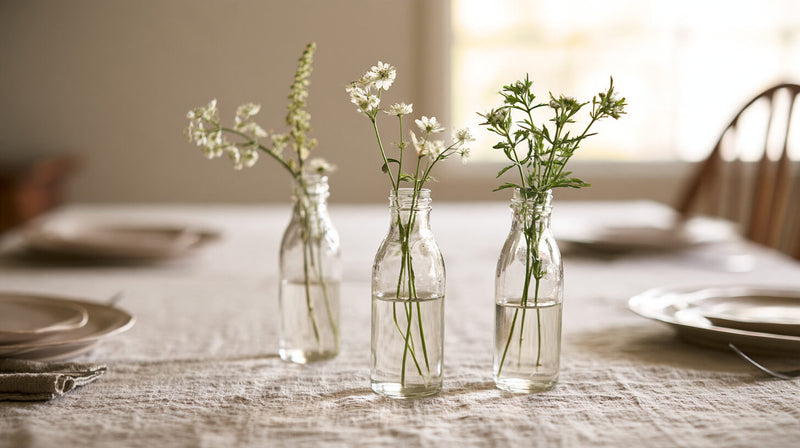
Bud vases work particularly well when you want to highlight individual blooms instead of creating one large bouquet. They can also be grouped together across a dining table, mantel, or wedding table to create a larger display from several smaller arrangements.


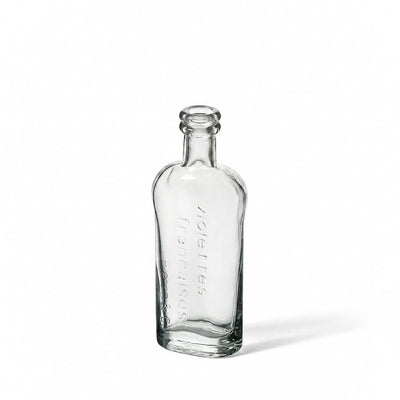
For example, a narrow-necked 7-inch vase such as the Clear Glass Pyramid Bottle has a .75-inch opening and is designed to display just a couple of stems.
Using several small vases also gives you more flexibility than one large arrangement. Flowers can be distributed along a long table instead of concentrating everything in the center.
Choosing a Vase for Larger Bouquets
Larger bouquets need enough room for the stems to spread without becoming overcrowded. This is where both the width of the body and the opening become especially important.

A wider vase can support fuller arrangements, while a taller vessel may provide better support for long stems. If your bouquet feels top-heavy, consider a vase with a broader or heavier base rather than simply choosing a taller one.
For large events, it is also worth checking dimensions carefully before ordering multiples. Quick Candles offers many flower vases in both individual and bulk quantities, making it easier to use the same proportions across multiple tables.
What Size Vase Works Best for Table Centerpieces?
Table arrangements have an additional consideration:the people sitting around them.
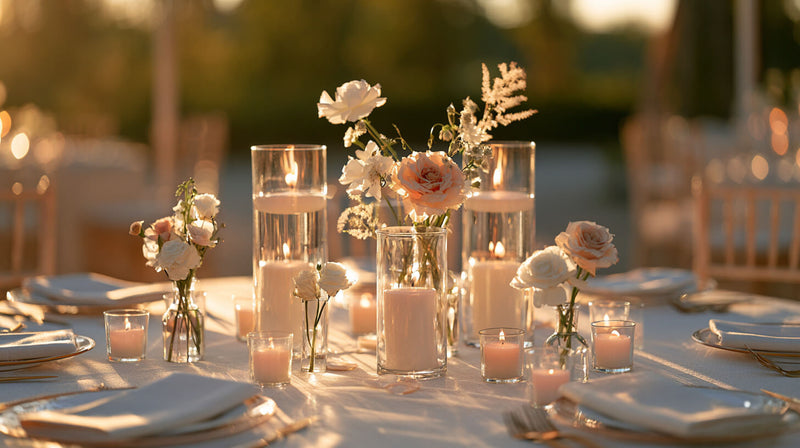
A floral arrangement can be beautifully proportioned but still be inconvenient if it sits directly in guests' line of sight. For dining tables, wedding receptions, and other seated events, consider the total height of the arrangement after the flowers are added—not simply the height of the empty vase.

Shorter vases and bud vases are useful for creating low arrangements that leave plenty of open space across the table.
Another option is to spread flowers across several smaller vessels. This works particularly well on rectangular and banquet tables, where one arrangement in the middle can leave the rest of the table looking empty.
For tall arrangements, consider the final placement of the blooms and greenery so the centerpiece doesn't create an awkward visual barrier between guests.
Don't Forget Vase Shape

Height and opening width aren't the only measurements that matter. Shape changes how flowers naturally fall.
Bud and bottle-style vases gather a small number of stems closely together.
Rounded vases give stems room to spread inside the vessel while still allowing the neck to control the arrangement.
Cylinder vases offer straight sides and are available in a wide range of heights. They can be used for flowers as well as other centerpiece designs. Quick Candles' cylinder vase collection includes standard, wide, and tall options.
The best shape depends on the flowers you are using and the finished look you want, so avoid choosing based on height alone.
Finding the Right Vase for Your Flowers
The easiest way to choose a vase is to considerstem length, bouquet size, opening width, and where the arrangement will be displayed.
A few stems usually need a smaller, narrower vessel. Full bouquets need more room. Long stems generally benefit from additional height and support. For table centerpieces, the final arrangement should also work comfortably with the surrounding place settings and guests.
Most importantly, treat vase measurements as a guide rather than a rigid formula. Flowers differ in size and structure, and trimming a stem by even a few inches can completely change the proportions.
Explore Quick Candles' flower vases to compare bud vases, hurricane vases, bubble ball vases, hanging vases, and other options for everyday flowers, weddings, events, and centerpieces.