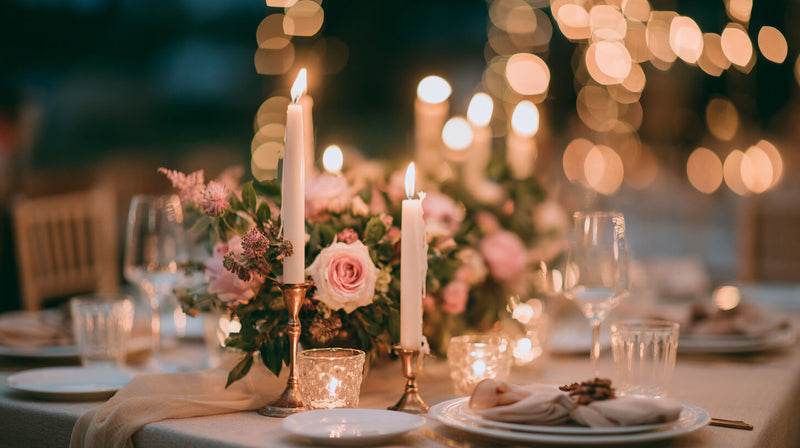
Creating a beautifully styled table often comes down to layering different décor elements in a way that feels balanced and intentional. By combining linens, candles, and centerpieces, hosts and event planners can transform ordinary tables into elegant focal points. Whether you are styling a wedding reception, dinner party, holiday gathering, or corporate event, layering décor helps create depth, texture, and visual interest across the entire tablescape.
From choosing the right tablecloth to arranging votive candles and floral centerpieces, every detail contributes to the overall look of the table. Understanding how these elements work together makes it easier to build a cohesive design that feels polished without becoming cluttered.
Start with the Foundation: Choosing the Right Tablecloth

Every layered table design begins with a strong foundation. Table linens set the tone for the entire arrangement and establish the color palette that the rest of the décor will follow. Selecting the right tablecloth ensures that all other decorative elements have a cohesive backdrop.
For banquet-style seating or long dining tables, rectangle tablecloths provide a clean and structured base. These linens are commonly used for wedding head tables, buffet tables, and guest seating layouts where tables are placed end to end. The long lines of rectangle tablecloths naturally guide the eye across the table and create a polished, organized appearance.
For round guest tables, round tablecloths offer a soft and balanced foundation. Because the fabric drapes evenly around the table, round tablecloths help create a symmetrical look that works beautifully for receptions, formal dinners, and celebration events. Choosing neutral tones can keep the design timeless, while bold colors can add personality and energy to the tablescape.
Add Dimension with Table Runners
Once the base linen is in place, a table runner introduces a second layer that adds texture and visual structure. Runners help define the center of the table while allowing the tablecloth underneath to remain visible, which creates depth within the overall design.
Many event planners use runners to highlight seasonal colors or introduce decorative fabrics such as chiffon, gauze, satin, or sequin. A runner placed along the length of rectangle tables creates a natural pathway for décor, while a shorter runner placed across round tables can help anchor centerpieces and candles in the middle of the arrangement.
When layering linens, consider contrast. A soft chiffon runner on top of classic rectangle tablecloths can create a romantic effect, while textured runners paired with neutral round tablecloths can add dimension without overwhelming the table design.

Build the Focal Point with Centerpieces
Centerpieces are often the main visual element of a table setting. They help anchor the design and bring together the surrounding layers of linens and candles. The size, height, and style of the centerpiece should complement the scale of the table while leaving enough room for place settings and serving dishes.
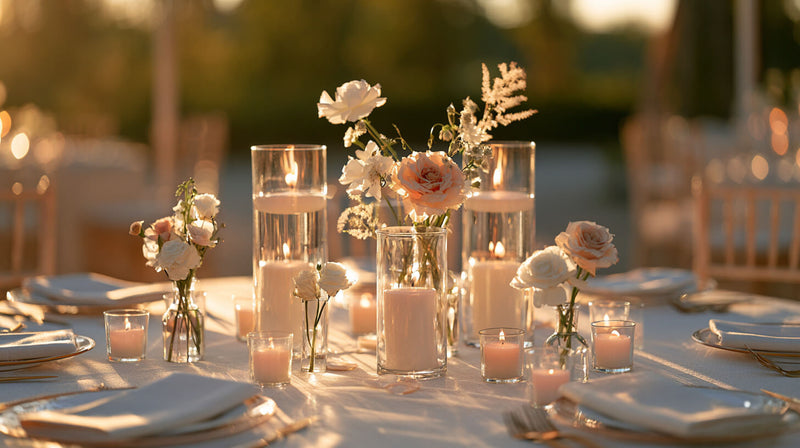
Floral arrangements remain one of the most popular centerpiece choices because they add color, freshness, and softness to the table. For formal events, tall centerpieces can create dramatic height and elegance. For smaller gatherings, low arrangements allow guests to converse comfortably across the table while still enjoying decorative detail.
Mixing different types of centerpieces across multiple tables can also create visual variety. Some tables may feature floral arrangements, while others might showcase lanterns, decorative stands, or candle groupings. Keeping the overall color palette consistent ensures the design still feels cohesive.
Enhance Ambiance with Candlelight
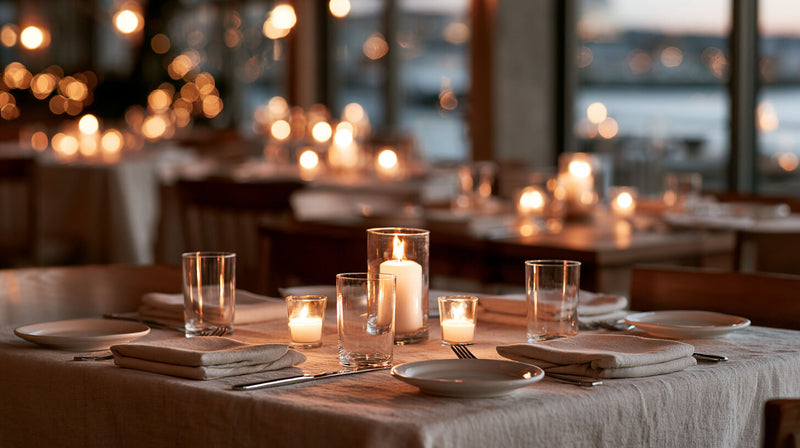
Candles introduce warmth and atmosphere that instantly elevates any tablescape. The soft glow of candlelight adds a welcoming and intimate feeling, making it especially popular for weddings, evening receptions, and holiday dinners.
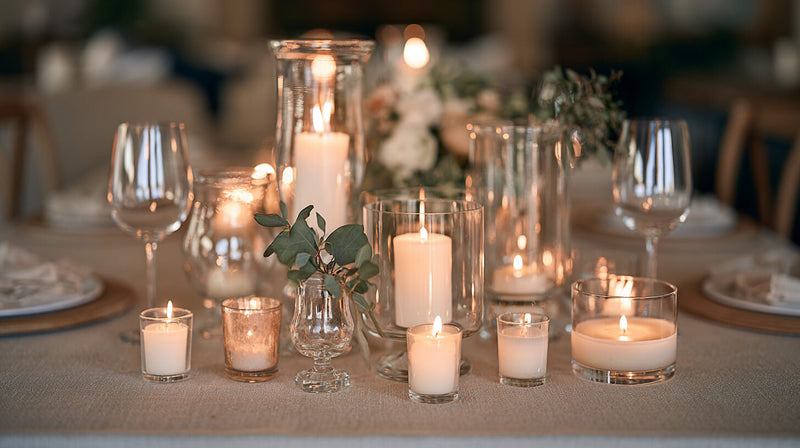
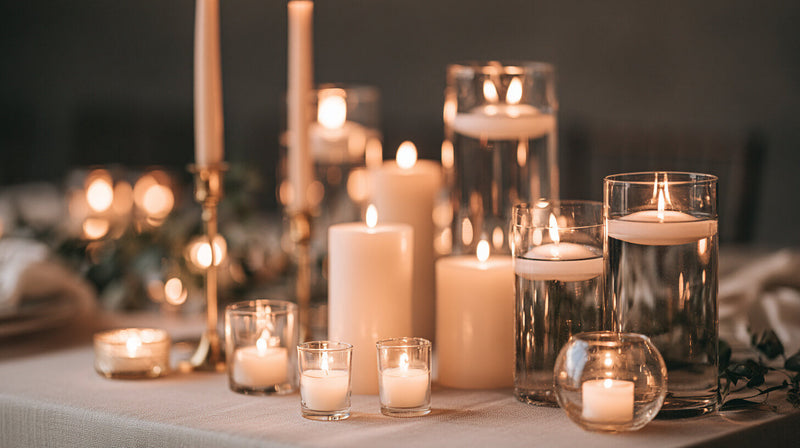
Layering different candle styles helps create a dynamic display that complements the centerpieces. Combining pillar candles with smaller accents such as votive candles allows the lighting to feel balanced across the entire table.
Using Pillar Candles for Height and Structure
Pillar candles are ideal for adding height to a table arrangement. Their larger size allows them to stand out as decorative elements while still blending seamlessly with floral centerpieces or greenery. Placing pillar candles on decorative trays, mirrored bases, or candle holders can further enhance their presence and reflect light across the table.
When grouped in varying heights, pillar candles create a layered lighting effect that draws attention toward the center of the table without overwhelming the surrounding décor.

Adding Soft Glow with Votive Candles
Votive candles provide smaller accents of light that fill in the spaces between larger décor pieces. Because of their compact size, votive candles can be scattered around centerpieces to create a soft and balanced glow across the entire tablescape.
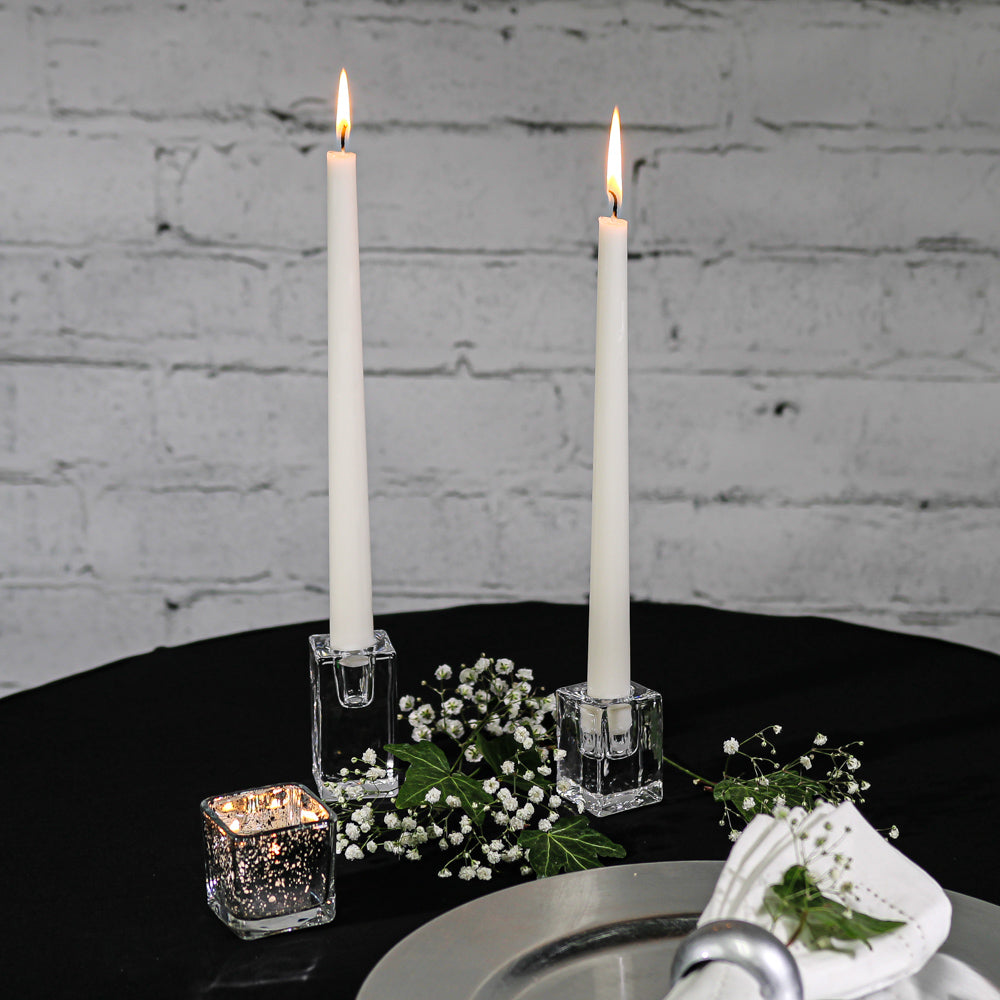
Glass holders, mercury finishes, or textured votive cups can enhance the sparkle of candlelight while complementing the overall theme of the event. These small lighting elements are especially effective when placed along table runners or between centerpiece arrangements.
Safe and Elegant Lighting with Flameless Candles
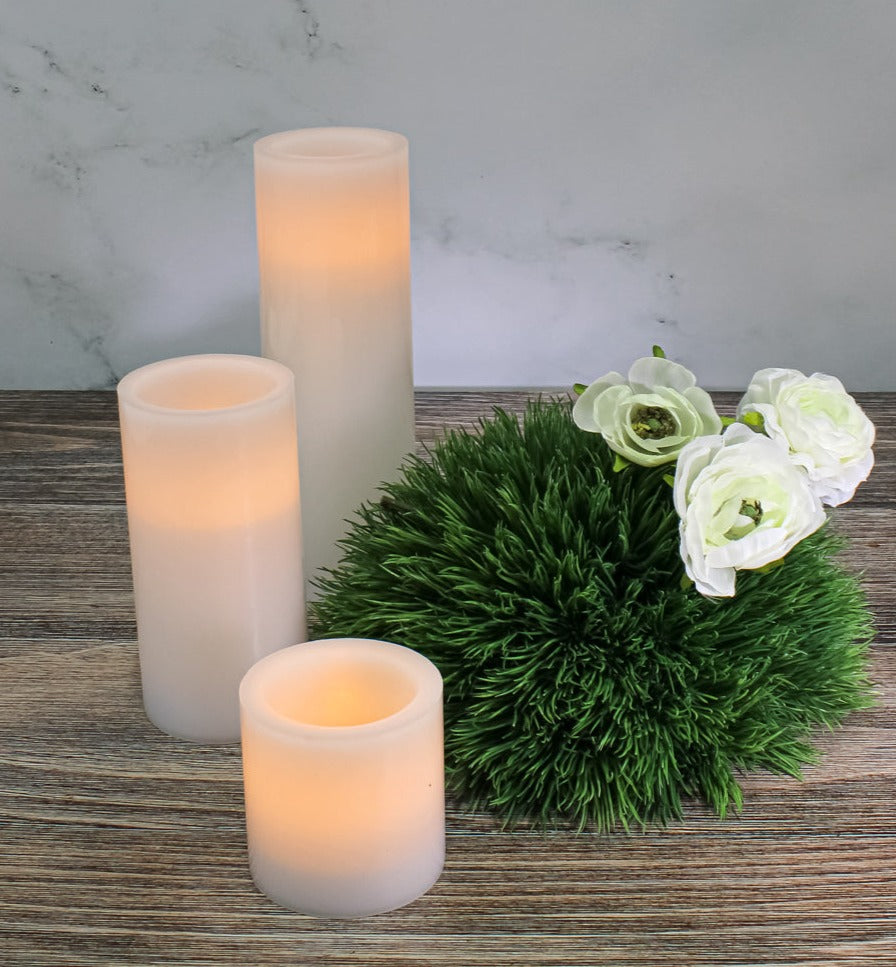
For venues that restrict open flames, flameless candles provide a practical alternative while maintaining the warm ambiance of traditional candlelight. Many flameless candles feature realistic flickering effects that closely resemble real candles, making them ideal for weddings, restaurants, and indoor events.
Flameless candles are also helpful for outdoor settings where wind may affect traditional candles. They can be used inside lanterns, glass cylinders, or decorative holders to maintain the layered look of candle décor without worrying about safety concerns.
Balancing the Layers for a Cohesive Table Design
The key to successful table layering is balance. Each element, linens, runners, centerpieces, and candles, should complement one another without competing for attention. A well-designed table allows each layer to stand out while still contributing to a cohesive overall aesthetic.
One helpful guideline is to vary height while maintaining open space. Taller elements like centerpieces or pillar candles should be balanced with lower accents such as votive candles and greenery. This variation creates visual interest while ensuring guests can still interact comfortably around the table.
Color coordination is equally important. If the tablecloth serves as a neutral foundation, runners and centerpieces can introduce stronger colors or textures. Alternatively, bold linens can be balanced with more subtle décor elements to keep the table from feeling too busy.
Creating a Memorable Tablescape
Layering table décor is an effective way to transform simple event tables into elegant visual experiences. By starting with quality linens such as rectangle tablecloths or round tablecloths, adding texture with runners, building focal points with centerpieces, and incorporating candlelight through pillar candles, votive candles, and flameless candles, hosts can design tables that feel warm, inviting, and thoughtfully styled.
With the right combination of layers, a tablescape can enhance the overall atmosphere of any event while leaving a lasting impression on guests. Thoughtful décor choices not only elevate the table itself but also contribute to the overall experience of the celebration.